
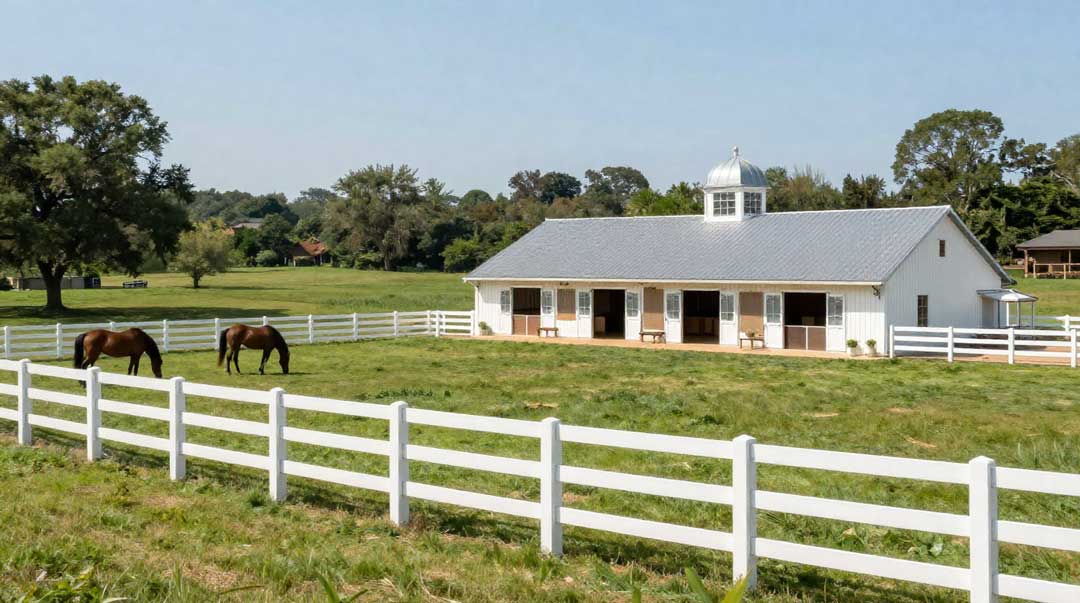
Benchmarking return on investment in horse farm mortgage loans plays a key role for you as a buyer or landowner today. Meanwhile, private farm lenders have seen horse property loans change, with money flowing into high-value rural assets across the United States.
Loan terms differ by region and size of project, pushing you to weigh the details that shape net gains over time. In particular, data from 2025 shows long-term fixed rates between 7% and 8%, while demand rose fast in key markets like Washington State after private lender growth.
These deals rely on a clear view of collateral worth since only land with strong equity backs minimum loan amounts of $400,000 or more. You may focus on raising ROI through custom payback plans that fit your cash flow from boarding ops or training work tied to the land itself.
With these benchmarks in hand, you can review horse farm loan options as the logical first step for any decision-maker ready to put large farm capital to work.
Assessing Horse Farm Loan Options
There are several horse farm loan options that each have clear loan rules and perks. The appraiser’s review will weigh whether your property fits more as a home or farm site, which is a big factor in the loan setup.
It’s vital to know that if you have big barns or horse cash flow, you may not get a standard home loan, due to Fannie Mae’s rules. In addition, Farm Mortgage Capital offers land-backed Horse farm mortgage loans, giving you flex for sites focused on horse use and worth.
The lender will look at papers like site surveys, pasture records, and details about arenas or income from boarding horses. There may also be local zoning, use permits, and roll-back tax risks if you shift land use away from farm use.
These parts all shape how lenders set expected return and risk, which ties right to current loan trends for rural horse sites. As a result, choosing a private farm real estate lender may let you get longer terms, land-based collateral, and loan plans better suited to your horse farm goals.
Evaluating Equine Property Financing Trends
Trends in equine property financing are shaped by shifting buyer needs and strong investor interest. Knowing today’s trends will help you gauge the return on your next Horse Farm Mortgage Loan.
- Institutional Investment Influence: Large institutional investors are putting more money into farm real estate and equestrian properties, based on their long-term, land-backed worth. This trend, noted in recent National Real Estate Investor surveys, leads to more competition and rising land prices that shape loan terms.
- Technology and Sustainability Demand: Equestrian buyers like you’re seeking properties with smart barn tech upgrades and green features that lift both use and value. According to a Horse Illustrated report, listings with energy-saving facilities and automated systems are selling faster and often need firmer loan terms.
- Evolving Market Data Transparency: You now see more focus on fast appraisals, neat property files, and smart pricing to speed up the farm real estate deal. This clarity, reported in The Land Report’s 2025 outlook, speeds up approvals and results in more competitive Agricultural Real Estate Loan offers.
Maximizing ROI in Horse Farm Investments
Maximizing return on horse farm investments means checking how property upgrades, extra income streams, and stable financing raise overall yield and long-term value.
- Expand Income Opportunities: Diversify your horse farm by adding extra income streams, such as offering agri-tourism stays or riding clinics for guests on the property. Vacation rentals built above barns, known as Barndominiums, are in high demand and can boost annual yields by 15% to 20%. Extra income from eco-tourism or glamping can also steady your cash flow and cut risk, making it easier for you to manage mortgage payments.
- Improve Property Design: Update the design of your farm to add multi-use structures, with options like modular barns or tiny house pods for you, staff, or workers. Upfront investment in new layouts often leads to higher rental income and land value growth within five years. Flexible build choices, like energy-saving builds, can also lower costs for you over the long haul.
- Optimize Land Use for Long-Term Value: Consider adding regenerative farm practices that boost both sustainability and overall land worth when you benchmark your farm’s financial performance. Adding practices such as forestry elements, pasture restoration, or even wildlife tourism can not only add revenue but also guard against single-sector downturns. By actively managing land to support many profitable uses, your property’s appraisal and refinancing potential with Farm Mortgage Capital may greatly improve.
Analyzing recent data from Farm Mortgage Capital shows that you stay focused on boosting returns from horse farm mortgage loans as market pressures change. Each loan choice ties back to land value, collateral strength, and the main upsides of set farm real estate loans.
Our experience shows that you can see more steady wins in tight markets when you track your ROI, especially in Washington and top rural states. Strong loan results often begin when you know land value and set real income goals.
In addition, our minimum loan size sets a firm line for borrowers who want larger impact. Equestrian buyers now favor longer terms to ease cash flow and guard against rate swings over time.
New deal data from recent quarters shows steady need for both land purchase loans and refinance deals backed by land. Meanwhile, investors who work on sibling buyouts or equity shifts also gain from deep tracking and new value models.
Close planning between you and our team helps you see which mortgage setups best support steady growth. As Farm Mortgage Capital grows licensing in once under-served states, we stay driven to give clear views of asset-backed loan options.
As a result, horse farm owners who plan their next deal will gain more trust through sharp tracking, set terms, and skilled, private loan support.