
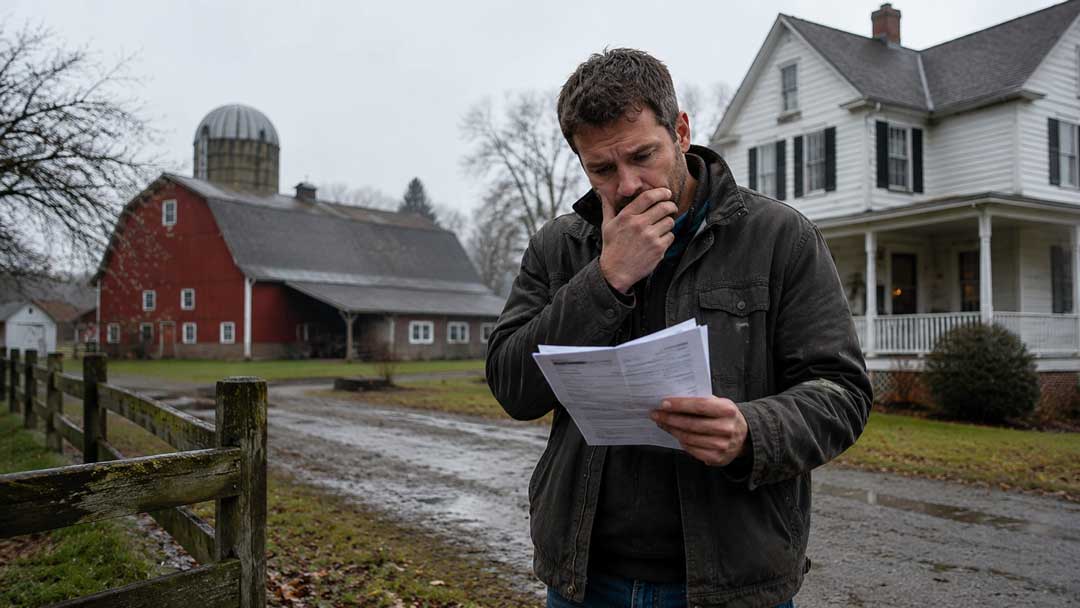
Mortgage payments tied to agricultural land financing carry serious financial consequences when payments are missed. Each late payment increases total loan exposure through added fees, accrued interest, and heightened lender scrutiny. Delinquent payment activity can also weaken borrower credit positioning, affecting future access to Agricultural Real Estate Loans and refinancing opportunities in Washington State and other rural lending markets.
In more severe situations, continued delinquency places agricultural property at risk of foreclosure proceedings and forced liquidation. These outcomes can directly affect long-term land ownership, operational continuity, and future borrowing capacity tied to rural real estate holdings.
Missed payment activity may also affect the standing of agricultural land financing tied to larger rural properties and income-producing operations. As delinquency periods extend, lenders increase collection activity, legal review, and repayment enforcement measures tied to the loan agreement.
Additional interest charges and late fees begin accumulating quickly once the payment grace period expires, increasing overall borrowing costs tied to farm real estate financing.
Late Fees and Added Interest Charges
Late fees increase rapidly after a payment deadline passes without full remittance. Most agricultural mortgage structures tied to a hobby farm mortgage in Washington include a short grace period before penalty charges are added to the account balance.
- Grace Period Expiration: Most lenders apply late-payment penalties once the contractual grace period ends. After this point, additional fees and accrued interest begin increasing the outstanding loan balance.
- Compounding Interest Costs: Missed payments create additional interest exposure because unpaid balances continue accruing charges throughout the delinquency period. Larger agricultural property loans can see balances increase quickly when multiple payments remain unresolved.
- Escalating Outstanding Balances: Additional charges tied to delinquent payments increase the total amount required to bring the loan current. This can place additional pressure on cash flow tied to seasonal agricultural operations.
- Refinancing Complications: Delinquent payment activity may weaken eligibility for future refinancing or restructuring opportunities. Agricultural mortgage lenders review payment history closely during underwriting evaluations.
- Impact on Agricultural Lending Relationships: Repeated late-payment activity can affect lender confidence and alter future financing terms tied to Agricultural Land Loans or Farm Refinance Loans. Larger agricultural lending relationships depend heavily on consistent repayment history.
These financial pressures become more significant for borrowers managing larger agricultural properties financed through Farm Mortgage Capital’s $400,000 minimum lending structure.
Credit Score Impact for Washington Borrowers
Missed mortgage payments can significantly affect borrower credit standing, particularly for agricultural borrowers operating within Washington State’s competitive rural lending environment. Credit deterioration tied to delinquent payments often affects future borrowing flexibility and financing costs.
- Substantial Credit Score Reduction: Agricultural borrowers can experience major score reductions after extended delinquency periods tied to farm property financing. Larger declines often occur after multiple missed payment cycles.
- Stronger Borrowers Often See Sharper Declines: Borrowers with historically strong credit profiles may experience larger score reductions because delinquent activity represents a greater deviation from prior repayment history.
- Long-Term Credit Recovery Periods: Recovery from mortgage delinquency may take years depending on the severity and duration of missed payments. Extended recovery periods can affect future financing access.
- Higher Financing Costs: Lower credit scores often result in less favorable financing terms tied to future Agricultural Real Estate Loans or Farmland Financing structures. Interest costs may increase substantially during future borrowing cycles.
- Lender Reporting Variability: Agricultural mortgage lenders may report delinquent activity differently depending on loan structure, partial payment arrangements, or restructuring agreements. However, unresolved delinquency remains a major underwriting concern across agricultural lending markets.
Washington State borrowers operating larger agricultural properties often face tighter underwriting review due to elevated rural property values and changing agricultural lending conditions.
Risk of Foreclosure on Agricultural Property
Continued delinquency on agricultural mortgage obligations can eventually lead to foreclosure activity and forced property liquidation. These proceedings directly affect long-term land ownership and operational continuity.
- Default Notices Increase Lending Pressure: Agricultural mortgage lenders generally begin formal default procedures after multiple missed payments. These notices signal increased collection and legal review activity tied to the outstanding balance.
- Forced Liquidation Risk: Unresolved delinquency can eventually lead to public sale or liquidation proceedings tied to the financed agricultural property. Larger rural properties often carry heightened financial exposure during these situations.
- Seasonal Revenue Limitations: Agricultural revenue cycles may not always generate sufficient liquidity to resolve delinquent balances quickly. Delayed commodity payments or operational downturns can intensify repayment pressure.
- Reduced Financing Flexibility: Borrowers facing foreclosure activity often lose access to refinancing or restructuring options available during earlier delinquency stages. Timing becomes increasingly important once default activity accelerates.
- Operational Disruption: Foreclosure proceedings can interrupt agricultural operations, expansion plans, and long-term land management strategies tied to the financed property. This creates broader operational exposure beyond the loan itself.
Agricultural mortgage lenders typically evaluate repayment consistency heavily when managing larger land-backed financing structures tied to established agricultural operations.
Loss of Financial Positioning and Lending Flexibility
Missed payments can weaken broader financial positioning tied to agricultural property ownership and long-term financing strategy. These effects often extend beyond the immediate loan balance itself.
- Reduced Borrowing Capacity: Delinquency activity weakens future borrowing strength tied to Agricultural Land Loans and Farmland Financing requests. Lenders place increased weight on repayment history during underwriting review.
- Weakened Equity Position: Added fees, accrued interest, and legal costs can reduce available equity tied to agricultural property holdings. Lower equity positions may affect future operational expansion opportunities.
- Operational Cash Flow Pressure: Larger agricultural operations often rely on stable financing structures to manage equipment costs, land improvements, and seasonal operating expenses. Delinquency increases overall cash-flow pressure.
- Increased Scrutiny From Agricultural Mortgage Lenders: Borrowers with payment issues may face tighter underwriting standards, higher reserve requirements, or revised collateral evaluations. Larger agricultural transactions require stronger repayment stability.
- Reduced Long-Term Financing Options: Delinquency can limit access to Buyout Loans, Farm Refinance Loans, and Agricultural Real Estate Loans structured for long-term operational growth. Consistent repayment history remains central to agricultural lending approval decisions.
Borrowers managing agricultural property financing should address payment concerns early before delinquency expands into broader operational or lending complications.
Missed payments tied to agricultural property financing create significant long-term financial consequences. Delinquency increases borrowing costs, weakens refinancing flexibility, affects credit positioning, and places agricultural land ownership at greater financial risk.
For borrowers operating larger agricultural properties in Washington State and other rural lending markets, repayment consistency remains essential to maintaining long-term financing stability. Agricultural mortgage lenders continue tightening underwriting standards across higher-value rural property transactions, particularly for financing structures exceeding Farm Mortgage Capital’s $400,000 minimum lending threshold.
Early communication with agricultural mortgage lenders often provides more restructuring flexibility before delinquency progresses into default proceedings or foreclosure review. Agricultural borrowers managing larger land-backed operations benefit from evaluating refinancing structures, operational cash flow planning, and long-term debt management strategies before repayment pressure escalates.
Farm Mortgage Capital continues to provide Agricultural Real Estate Loans, Agricultural Land Loans, Farm Refinance Loans, and land-backed financing solutions designed for experienced agricultural operators seeking long-term private financing without government-backed lending structures.